Microsoft's 10 New AI Agents News | AviaryAI Newsletter
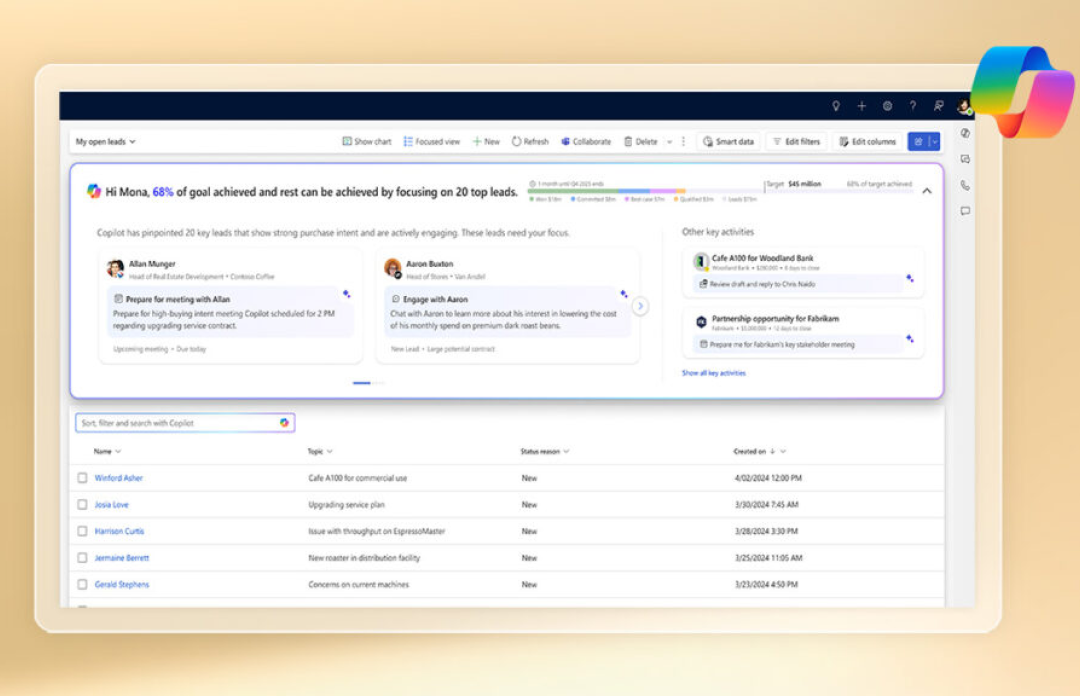
Microsoft's release of 10 pre-built AI agents for daily business automation -- combined with AWS's deepened investment in Anthropic -- signals that the AI infrastructure battle is intensifying. For credit union technology and operations leaders, this rapid platform development creates both opportunity and complexity: more AI tools are available than ever, but choosing the right ones for financial services requires understanding what general-purpose platforms do well and where purpose-built financial AI is essential.
Microsoft Releases New Pre-Built AI Agents
Microsoft is launching 10 new autonomous agents within their Dynamics 365 platform, aimed at streamlining processes across sales, finance, and supply chains. These agents, including a Sales Order Agent and a Financial Reconciliation Agent, promise to free up employee time by handling repetitive tasks, allowing teams to focus on strategic initiatives.
So What?
As AI tools become more integrated into business processes, the need for talent that can manage and optimize these systems grows critical. Organizations must invest in skilled personnel who understand how to leverage AI effectively.
Read the full story here
AWS Invests Additional $4 Billion into Anthropic
Amazon Web Services (AWS) is doubling down on its partnership with Anthropic, committing a total of $8 billion to advance AI development. With this investment, AWS becomes the primary cloud and training partner, working closely with Anthropic on optimizing Trainium hardware and software. This synergy aims to maximize computational efficiency and empower next-gen AI research, with Claude models serving as core infrastructure across diverse sectors.
So what?
This massive investment reflects a growing trend toward AI that is not just powerful, but also deeply integrated and customized across industries. Such advancements have the potential to democratize AI technology, making it accessible and adaptable for organizations of all sizes. Beyond efficiency, this paves the way for new innovations in personalized services, data security, and regulatory compliance.
Read the full story here
AI in the Classroom: OpenAI's Free Course for Teachers
In a bid to revolutionize education, OpenAI offers a free training program aimed at teachers. It covers AI basics and prompt engineering, helping educators use ChatGPT as a learning tool. This initiative, in partnership with Common Sense Media, seeks to responsibly integrate AI into classrooms and empower educators.
So What?
This initiative highlights a crucial development: AI's role in reshaping foundational skills. As AI literacy becomes essential, institutions across industries must adapt by prioritizing AI education for all levels. This isn't just about teaching educators—it's about preparing every industry for an AI-infused future.
Read the full story here
Knowledge Cutoff
A knowledge cutoff represents the last date up to which the model was trained on information from the real world. Think of it as a chronological limit on the model's knowledge base. For instance, if a model has a knowledge cutoff of January 2022, it won't have any awareness of events, developments, or information that emerged after that date. This limitation is crucial to understand when interacting with AI systems, as it directly impacts their ability to discuss or analyze contemporary events.

Combatting AI Document Fraud
AI is dramatically transforming the landscape of financial fraud, with digital documents and deepfakes at the forefront. According to a report from the Entrust Cybersecurity Institute, there has been a staggering 1,600% increase in digital document forgery since 2021, surpassing physical counterfeits for the first time.
This shift is reshaping how fraud is perpetrated, with digital forgeries making up 57% of all document fraud cases in 2024. The financial services sector, particularly cryptocurrency platforms, is facing heightened risk, experiencing the highest rates of fraudulent activity. As these AI-driven techniques become increasingly sophisticated, the financial industry must adapt to this new era of crime to protect their assets and operations.
So what?
The surge in AI-driven fraud emphasizes the critical need for financial organizations to strengthen their cybersecurity defenses. It’s not just about upgrading technology; it involves cultivating a culture of cybersecurity awareness and resilience across all levels of an organization.
Credit unions must acknowledge that traditional security measures are no longer sufficient in combating these complex threats. By investing in employee training and up-to-date detection technologies, institutions can better safeguard their data and maintain trust with their members. Understanding this new threat landscape is essential to prepare for and respond to the evolving tactics that fraudsters use.
Frequently Asked Questions
Can credit unions use Microsoft's new AI agents for member communication?
Microsoft's AI agents are designed for general business productivity tasks. For member-facing communication -- particularly outbound calls, compliance-sensitive interactions, and financial product discussions -- purpose-built platforms with financial services training and TCPA compliance are required.
What is the difference between Microsoft Copilot and a financial services AI agent?
Microsoft Copilot is a general-purpose productivity AI built for enterprise software workflows. Financial services AI agents, like AviaryAI, are trained on financial industry data, designed for voice interaction with members, and built with specific compliance guardrails for banking and credit union regulations.
How does AWS's investment in Anthropic affect credit unions?
It signals long-term institutional commitment to Claude as an enterprise AI model -- which increases its reliability as an underlying technology for financial services AI platforms. Credit unions using platforms built on Anthropic models can expect continued investment and improvement.